Lawn Care in Finchley: Practical Tips, Seasonal Advice, and Local Know-How
Lawn care in Finchley is about more than just keeping grass short. In a busy North London setting, your lawn has to cope with changing weather, compacted soil, shade from mature trees, foot traffic, and the everyday wear that comes with family life. A healthy lawn can transform a front garden, create a welcoming outdoor space, and add value to a property, but achieving that result takes consistent attention and the right approach for local conditions.
Whether you own a small urban garden or a larger suburban plot, lawn care in Finchley needs to be tailored to the season, the soil, and the way the space is used. The good news is that with a smart routine, the right mowing habits, and a little patience, you can build a greener, thicker, and more resilient lawn. This article explores the key elements of effective lawn maintenance in Finchley, from mowing and feeding to weed control, aeration, and year-round care.
Many homeowners begin with simple tasks such as cutting the grass and removing leaves, but the best results come from understanding what the lawn actually needs. In Finchley, that often means dealing with clay-heavy or compacted soil, irregular sunlight, and periods of drought in summer followed by wet spells in autumn and winter. Adapting your lawn care routine to local conditions is one of the most reliable ways to keep turf looking its best.
Why Lawn Care in Finchley Needs a Local Approach

Finchley’s gardens often reflect the character of the area itself: established, varied, and sometimes slightly challenging. Some properties enjoy open sun, while others sit under mature hedges, large trees, or neighbouring buildings that limit light. These differences matter because grass growth depends heavily on sunlight, airflow, and drainage. A lawn care strategy that works in a wide-open rural garden may not deliver the same results in a Finchley back garden.
One of the most common issues in lawn care in Finchley is soil compaction. Frequent use, especially in smaller gardens, can squeeze the soil so tightly that water, air, and nutrients struggle to reach the roots. This often leads to patchy growth, moss, and poor recovery after dry periods. Regular aeration and proper feeding can make a major difference, especially where the lawn is heavily used by children, pets, or regular entertaining.
Local weather patterns also influence how a lawn behaves throughout the year. Spring usually brings strong growth, summer can cause stress and browning, autumn supports recovery, and winter creates risks from waterlogging and disease. A Finchley lawn needs care that responds to those changes rather than relying on a one-size-fits-all approach.
Understanding Finchley Soil and Grass Conditions

Before improving a lawn, it helps to understand the ground underneath it. Finchley gardens can vary, but many properties experience heavier soil that holds moisture for longer periods. That can be useful in dry weather, but it also raises the risk of poor drainage, moss development, and shallow roots if the lawn is not managed properly.
In lawns with denser soil, the roots may struggle to spread deeply. The result is grass that looks fine after rainfall but quickly becomes stressed when the weather turns warm. In practical terms, lawn care in Finchley often involves improving the soil structure as much as maintaining the grass itself. Aeration, topdressing, and sensible watering all help create healthier conditions below the surface.
Grass type matters too. Most domestic lawns contain a mixture of perennial ryegrass, fescues, and sometimes bentgrass. Each responds differently to shade, wear, and mowing height. Choosing the right balance of grasses, or overseeding with improved varieties, can significantly enhance appearance and durability. If parts of the garden are shaded for much of the day, it may be worth selecting a shade-tolerant seed mix to reduce thinning.
Core Tasks for a Healthy Lawn

A good lawn care routine does not need to be complicated, but it should be consistent. The most important tasks are mowing, watering, feeding, weed control, and soil improvement. When these are managed in the right order and at the right time, the lawn becomes stronger and more attractive over time.
Key lawn maintenance tasks in Finchley include:
- Regular mowing at the correct height
- Watering deeply rather than lightly and frequently
- Feeding with the right fertiliser for the season
- Scarifying to remove thatch and moss
- Aerating compacted soil to improve airflow
- Overseeding thin or damaged areas
- Controlling weeds before they spread
These tasks are most effective when they are timed well. For example, feeding at the wrong time can encourage weak growth, while mowing too short can stress the lawn and invite weeds. Successful lawn care in Finchley is about balance, observation, and knowing when to act.
Mowing: The Foundation of Lawn Care in Finchley
Mowing is the task most people notice first, and it has a bigger impact than many realise. A lawn that is cut too short can become stressed, dry out faster, and struggle to recover after hot weather. On the other hand, a lawn that is left too long may look untidy and become more prone to disease or thatch build-up. The goal is to maintain a healthy height rather than simply cutting grass as low as possible.
In Finchley, mowing frequency usually increases during spring and early summer, when growth is strongest. During hotter periods, it is better to cut less aggressively and avoid removing more than one-third of the grass blade at a time. Sharper mower blades also matter because torn grass edges can turn brown and create a dull appearance. Clean cuts support faster recovery and a tidier finish.
For most domestic lawns, a moderate mowing height works well. Slightly longer grass often performs better in shaded or drought-prone areas because it protects the roots and helps retain moisture. Adjusting the cutting height seasonally is a simple but effective part of lawn care in Finchley.
Mowing tips that improve results
To get the best outcome, it helps to follow a few practical habits:
- Mow when the grass is dry to reduce clumping.
- Keep mower blades sharp for a clean cut.
- Alternate mowing patterns to avoid ruts and soil compaction.
- Raise the cutting height in summer and shaded areas.
- Remove only a small amount of growth in each session.
Watering and Drought Stress in Finchley Gardens
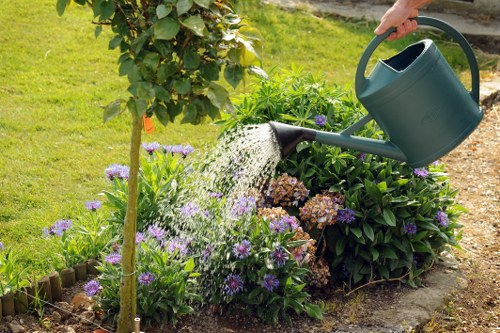
Watering is one of the most misunderstood parts of lawn care. Many people water too often but too lightly, which encourages the roots to stay near the surface. A better approach is to water less frequently but more deeply so moisture reaches further down into the soil. This helps grass build resilience against heat and dry conditions.
Finchley lawns may need extra attention during warm spells, especially if they are exposed to strong sun or sit on drier ground. Signs of drought stress include bluish-green colouring, footprints that remain visible after walking across the lawn, and a general lack of bounce in the turf. When these symptoms appear, targeted watering can help prevent longer-term damage.
However, watering should be sensible. Overwatering can create soft growth, encourage shallow roots, and increase disease risk. In areas with poor drainage, excessive moisture may also lead to moss and fungal problems. The best lawn care in Finchley often involves observing the lawn carefully and responding to its condition rather than sticking to a fixed watering schedule.
Useful watering habits:
- Water early in the morning where possible
- Give lawns a deep soak rather than a daily sprinkle
- Focus on newly seeded or recently repaired areas
- Avoid watering if rain is expected soon
- Use collected rainwater when suitable
Feeding the Lawn for Stronger Growth

Feeding is a major part of improving lawn quality because grass needs nutrients to grow thick, green, and resilient. A balanced lawn feed supports root development, encourages recovery after wear, and improves colour. In Finchley, seasonal feeding is especially valuable because lawns often face heavy use and variable weather.
Different feeds work at different times of year. Spring fertilisers often promote strong growth and colour, while summer products may focus more on stress resistance. Autumn feeds generally contain lower nitrogen and higher potassium to prepare the grass for winter. Choosing the right formula matters because feeding at the wrong time can encourage weak, lush growth that is more vulnerable to disease.
When applying fertiliser, even distribution is important. Patchy application can result in streaks of strong growth alongside weak areas. Watering in the feed, if recommended, helps nutrients move into the soil. In a well-managed lawn care routine, feeding should work alongside mowing and aeration rather than replacing them.
Common signs your lawn needs feeding
- Pale or yellowing grass
- Slow recovery after mowing
- Thin patches in busy areas
- Weak colour despite adequate watering
- Low resistance to wear and foot traffic
Dealing with Weeds, Moss, and Patchy Areas
Weeds, moss, and bare patches are common challenges in lawn care in Finchley. They often appear when grass is under stress, soil is compacted, or light is limited. Rather than simply treating the visible problem, it is important to understand why it has appeared in the first place. That approach leads to longer-lasting results.
Weeds such as dandelions, clover, and plantain can spread quickly if left unchecked. Some are shallow-rooted and easy to remove manually, while others require targeted treatment. Moss, meanwhile, usually indicates shade, damp soil, or weak turf. It does not necessarily mean the lawn is failing, but it does suggest that conditions need improving. Reducing moss often means improving drainage, airflow, and grass strength.
Patchy areas can develop for many reasons, including dog activity, heavy use, shade, pests, or simply poor establishment. Overseeding is often the best solution. By applying seed to bare or thinning spots, you can gradually restore a more even surface. For better germination, the area should be lightly raked, seeded, and kept moist until new grass becomes established.
Practical ways to reduce recurring problems
- Improve drainage through aeration and topdressing
- Cut grass at a healthy height to shade out weeds
- Overseed in thin areas before problems spread
- Remove fallen leaves promptly in autumn
- Address shade and compaction rather than only treating symptoms
Aeration, Scarifying, and Soil Improvement
Aeration and scarifying are two of the most valuable treatments for long-term lawn health. They are especially useful in Finchley gardens where compacted soil, moss, and thatch can reduce growth quality. Aeration creates small holes in the ground to improve drainage and airflow, while scarifying removes dead material that can choke the grass.
Scarifying is particularly effective when the lawn has a thick layer of thatch or moss. That layer can trap moisture and block nutrients from reaching the soil. Once removed, the grass has a better chance to breathe and recover. Aeration, meanwhile, helps loosen compacted areas and encourages stronger root development. Together, these treatments create a much better foundation for healthy turf.
Topdressing is often used after aeration or scarifying. A thin layer of sand-based or soil-based mix can help improve surface level, drainage, and seed-to-soil contact. In lawn care in Finchley, this combination of treatments can be especially useful for older lawns that have become tired or uneven over time.
When to consider these treatments
- If water pools on the surface after rain
- If the lawn feels firm and compacted underfoot
- If moss is spreading despite regular cutting
- If the grass thins quickly after dry weather
- If the lawn is used heavily and recovers slowly
Seasonal Lawn Care in Finchley
Each season creates different conditions, so lawn care in Finchley should change throughout the year. What works in spring will not always suit autumn, and the best results come from following the natural rhythm of growth, rest, and recovery.
In spring, the priority is to clean up debris, start mowing regularly, feed the grass, and repair winter damage. This is also a good time to overseed thin areas and improve the soil if needed. Summer is about maintaining health under stress, so mowing slightly higher and watering deeply can help the lawn cope with heat. Autumn focuses on restoration, leaf removal, feeding, and preparing the grass for the colder months. Winter is generally a quieter season, but it still matters to avoid unnecessary traffic on waterlogged or frosty ground.
Seasonal lawn care checklist:
- Spring: rake, feed, mow, overseed, and aerate if required
- Summer: water wisely, mow higher, and avoid scalp cutting
- Autumn: remove leaves, apply autumn feed, and repair worn patches
- Winter: minimise damage and keep the lawn clear of debris
Improving Shade-Tolerant Areas
Many Finchley gardens include sections that receive only partial sunlight. These areas can be difficult for standard lawn mixtures because grass grows more slowly and often becomes thin. Shade from fences, hedges, neighbouring buildings, or mature trees can create a cool, damp environment where moss thrives and turf struggles.
For these locations, lawn care in Finchley may need to include a more suitable seed blend, careful mowing, and better airflow. Trimming overgrown branches where appropriate can increase light levels, while avoiding excessive watering can help prevent moisture-related problems. In more stubborn shaded spots, it may be necessary to accept that grass will always grow more slowly and manage expectations accordingly.
That does not mean a shaded lawn cannot look good. With the right seed mix, moderate maintenance, and a little patience, many shaded areas can improve significantly. The key is to support the grass without overworking it.
Lawn Care for Busy Homes, Pets, and Family Use
Not every garden is purely decorative. In many Finchley homes, the lawn is part play area, part relaxation space, and part social area. That kind of use increases wear and tear, but it also means the lawn can become a central feature of the property. The challenge is to keep it attractive while allowing it to serve everyday life.
For busy lawns, resilience matters more than perfection. Stronger grass species, regular feeding, and sensible mowing heights all help the surface recover from damage. If pets or children use the garden heavily, it may be useful to rotate play zones, reseed worn paths, and aerate compacted sections regularly. A practical lawn is often a better lawn than a fragile one.
In these settings, consistent lawn maintenance makes a noticeable difference. Small, regular efforts usually produce better results than occasional major repairs. That includes keeping edges tidy, clearing debris, and dealing with small issues before they become bigger ones.
Simple ways to protect high-use lawns
- Allow the grass to grow slightly longer for extra resilience
- Repair bare patches quickly
- Limit repeated traffic on the same route
- Use seasonal feeding to support recovery
- Aerate compacted sections at least once a year
When to Consider Professional Lawn Care in Finchley
Some lawn problems are easy to manage at home, but others need more advanced attention. If a lawn has persistent moss, widespread thinning, drainage problems, or recurring disease, professional help can save time and improve results. Expert lawn care in Finchley often includes assessment of soil health, targeted treatment plans, and the correct timing for aeration, feeding, and repair work.
Professional support can also be useful if you want a lawn to recover quickly after renovation, if you are preparing a property for sale, or if you simply want a more polished finish. Book your service now if your lawn has become difficult to manage and you want a tailored plan that suits local conditions. Even if you maintain the lawn yourself, a professional assessment can highlight issues that are easy to overlook.
Well-managed lawns tend to have common traits: good drainage, balanced feeding, regular cutting, and timely repair. A specialist can help bring those elements together in a practical way. Contact us today if you want to take the next step toward a healthier, more attractive garden.
Long-Term Results: Building a Better Lawn Over Time
One of the most important things to remember about lawn care in Finchley is that great results do not happen overnight. Grass improves gradually when the root system becomes stronger, the soil condition improves, and the maintenance routine stays consistent. That is why regular care is usually more effective than occasional intensive work.
Over time, small improvements add up. Better mowing habits reduce stress. Aeration improves root growth. Feeding supports colour and recovery. Overseeding fills gaps. Weed control prevents competition. Each step contributes to a thicker, greener, and more resilient lawn. The overall effect can be dramatic, especially in gardens that have struggled for years.
Consistency is the real secret. When you treat the lawn as a living part of the garden rather than a surface to trim occasionally, the results tend to follow. The effort is worthwhile because a healthy lawn not only looks better but also creates a more enjoyable outdoor space for everyday use.
In summary, lawn care in Finchley works best when it is local, seasonal, and practical. By paying attention to soil, shade, drainage, mowing height, and feeding schedules, you can make steady progress throughout the year. Whether you want to improve a tired front lawn or maintain a family garden, the right approach will help your grass stay healthier for longer. If you are ready to improve your outdoor space, book your service now and give your lawn the attention it deserves.

